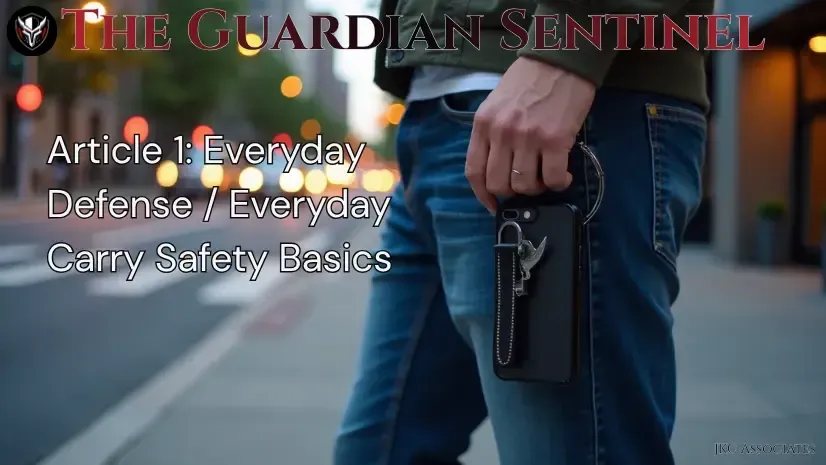
Everyday Carry Safety Basics: Simple Ways to Feel More Prepared
If you’ve ever had a moment where you thought, “I wish I had something on me right now,” you already understand the core of everyday defense. Everyday carry (EDC) isn’t about turning your pockets into a toolbox or living in fear. It’s about quietly giving yourself a little more control when life gets messy, inconvenient, or unexpectedly stressful.
At Guardian Gear, we think of everyday defense as a practical layer of preparedness you can carry with you—light, simple items that help you handle the most common challenges without overcomplicating your life. To explore more of our systems and field notes, visit Guardian Gear.
Everyday defense starts with mindset, not gear
Before you think about what to carry, it helps to think about how you move through your day.
Four simple principles guide a healthy everyday defense mindset:
Awareness over anxiety. The goal is to notice what’s around you, not to feel constantly on edge. A small shift in awareness—knowing your exits, keeping an eye on your surroundings—goes further than any gadget.
Simplicity over clutter. Carrying too much gear can be just as distracting as carrying nothing. Everyday carry should be light enough that you barely notice it until you need it.
Legality and responsibility. Any safety or self-defense item you carry should be legal where you live and used with respect. The goal is to protect, not escalate.
Protection, not bravado. Everyday defense is about protecting yourself and the people you care about, not proving anything to strangers.
Once those principles are in place, building an everyday carry setup feels more like editing than hoarding.
Core layers of everyday carry
A good everyday defense kit works in layers, so you’re not relying on one single item.
1. On‑body essentials
These are the items that live on you or in your pockets, almost every day:
Light: A small, reliable flashlight makes dark stairs, parking lots, and power outages much easier to navigate. It’s also a subtle signal that you are paying attention.
Noise: A simple whistle or personal alarm can draw attention quickly if you need help in a public space.
Discreet self-defense tool (where legal): In some regions, a compact, non-lethal tool can provide a last‑ditch layer of protection. It should be simple to use and carried with a clear sense of responsibility.
Phone readiness: Not a gadget you buy, but a habit—charged battery, emergency contacts saved, and the ability to quickly share your location with a trusted person if needed.
The test: if you had to leave your home in a hurry, could your on‑body essentials help you see, signal, and stay connected?
2. Bag or vehicle backup
Many people carry a bag, backpack, or drive regularly. That space can hold items you don’t want on your person, but still want within reach:
Duplicates of critical items: A second flashlight, spare batteries, and a backup charging cable.
Basic comfort and protection: A compact rain poncho, gloves, or small first‑aid items.
Organizers: Pouches or small kits that keep tools together so you’re not digging through clutter when you need something.
This layer is about making the rest of your day smoother—travel, commuting, errands—while quietly backing up your on‑body essentials.
3. Digital and identity basics
Everyday defense isn’t only physical. A few simple digital habits can make you much easier to help if something goes wrong:
Save an ICE (In Case of Emergency) contact in your phone.
Make sure at least one trusted person knows your general routine.
Use secure, unique passwords for important accounts, and consider a password manager.
Keep copies of important documents stored securely, with a simple way to access them if your wallet is lost or stolen.
None of these are dramatic steps. They’re quiet safeguards that make everyday life more resilient.
Building a simple everyday defense kit
If you’re starting from scratch, it’s tempting to go out and buy everything at once. We recommend a slower, more intentional approach:
Start with your routine.
Think through a normal week: commute, errands, work, home. Where do you most often feel unprepared—dark parking lots, travel delays, busy public spaces? That’s where your kit should focus first.Choose a small set of core items.
Instead of a long list, begin with a handful of essentials:One light source.
One noise or signaling option.
One discreet, legal self-defense or protection tool, if appropriate for your area.
A simple way to carry them comfortably (keychain, pocket organizer, or small pouch).
Test it in real life.
Carry your setup for a week. Notice what feels useful, what feels like overkill, and what you never touch. Everyday defense is something you refine over time, not a one‑time purchase.Adjust for context.
Your everyday defense kit for a busy city might look different than what you carry on quiet local errands or family outings. It’s okay for your setup to change with seasons and locations.
Over time, this turns into a personal system—light, discreet, and tuned to the way you actually live.
How Guardian Gear’s Everyday Defense system fits in
Guardian Gear’s Everyday Defense system is designed as a curated starting point for building your own everyday carry. Instead of choosing from dozens of random products, you get:
A focused selection of practical tools aimed at visibility, signaling, and basic protection.
Items that are designed to be carried comfortably, not left in a drawer.
A system that works as a whole, but can be tailored to your routine.
Explore our Everyday Defense system on shop.guardiangearhq.com for a curated set of tools designed to support practical everyday carry.
Watch for new articles in The Guardian Sentinel at guardiangearhq.com/guardian-sentinel, where we’ll cover travel safety, situational awareness, and home entry essentials.
Everyday defense is about peace of mind, not perfection
The goal of everyday carry safety isn’t to predict every possible scenario. It’s to give yourself a little more margin—a bit more light, a bit more ability to signal, a bit more confidence that you’re not helpless if something unexpected happens.
If you keep the mindset simple and the gear reasonable, everyday defense becomes part of your life quietly, without taking it over. And that’s where it works best: one small, thoughtful layer of preparedness you carry with you, every day.
About The Guardian Sentinel
The Guardian Sentinel is published by Guardian Gear to provide practical, fact-focused insights on personal safety, home security, and everyday readiness, using the best available data and real-world experience. We appreciate you taking the time to read and share these articles. When you explore or purchase products through our links, you help support this work and the ongoing development of new guides—all at no additional cost to you.
Disclosure & affiliations
Guardian Gear is owned and operated by J Kimo Collins & Associates, and many of the products mentioned in our articles are available directly through our store. From time to time, we may also recommend must-have items from trusted partner brands or affiliate programs when they offer value we don’t currently provide. Some links in our articles and emails may be affiliate links, which means we may earn a commission if you choose to make a purchase through them. This does not change your price and helps support our ability to research, test, and share practical safety guidance.
Guardian Gear is part of the J Kimo Collins & Associates family of companies, focused on practical safety, readiness, and everyday protection across online education, tools, and curated gear.